Description:
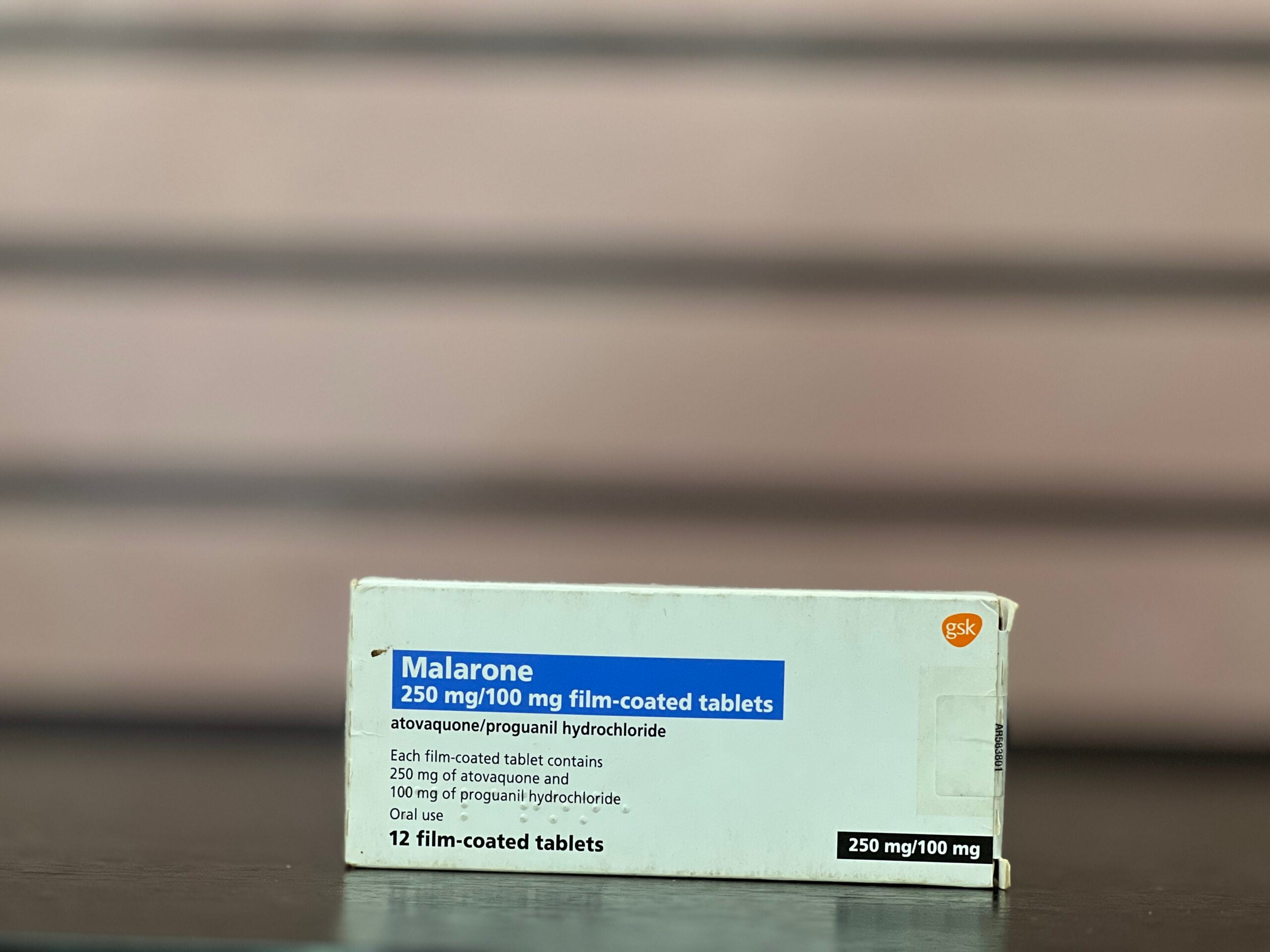
Malarone tablet is a fixed-dose combination antimalarial medication containing atovaquone and proguanil hydrochloride. It is used for both the prevention (prophylaxis) of malaria caused by Plasmodium falciparum (including in chloroquine-resistant areas) and the treatment of acute, uncomplicated P. falciparum malaria in adults and children. It works by interfering with two different pathways in the parasite’s life cycle: atovaquone inhibits mitochondrial electron transport, and proguanil (via its metabolite cycloguanil) blocks dihydrofolate reductase, leading to parasite death.
Prescription:
Therapeutic Category:
- Antimalarial / Antiprotozoal (fixed combination)
Active Ingredients/Composition:
- Atovaquone 250 mg + Proguanil hydrochloride 100 mg per adult tablet.
Variant:
- Adult strength tablet (250 mg atovaquone / 100 mg proguanil hydrochloride; pink, film-coated, round, biconvex, engraved “GX CM3” on one side).
- Pediatric tablet (62.5 mg atovaquone / 25 mg proguanil hydrochloride; pink, film-coated, round, biconvex, engraved “GX CG7” on one side). Common pack sizes: 12, 24, 100 adult tablets or 100 pediatric tablets.
Consume Type:
Directions/Usage:
Take with food or a milky drink at the same time each day to improve absorption. In case of vomiting within 1 hour, repeat the dose.
- Prophylaxis: Start 1–2 days before entering malaria-endemic area; continue daily during stay and for 7 days after leaving. Adults: 1 adult tablet once daily. Children: Weight-based (e.g., 11–20 kg: 1 pediatric tablet; >40 kg: 1 adult tablet).
- Treatment (uncomplicated P. falciparum malaria): Single daily dose for 3 consecutive days. Adults: 4 adult tablets (1 g atovaquone / 400 mg proguanil) once daily. Children: Weight-based (e.g., 11–20 kg: 1 adult tablet; >40 kg: 4 adult tablets). Do not exceed recommended dose; complete full course. Consult doctor for exact regimen based on travel area and patient factors.
Common Side Effects:
- Abdominal pain, nausea, vomiting, diarrhea, headache, anorexia (loss of appetite), dizziness, cough, fever, rash, pruritus (itching), or mouth ulcers. Side effects are usually mild and resolve without stopping treatment. Less common: elevated liver enzymes, photosensitivity, or mouth sores.
Package Type:
Storage Advice:
- Store at room temperature 15–30°C (59–86°F), protected from light and moisture. Keep in original blister/packaging with tight closure. Keep out of reach of children.
Safety Advice:
- Prescription only; use under medical supervision with malaria risk assessment. Contraindicated in severe renal impairment (creatinine clearance <30 mL/min) for prophylaxis (risk of pancytopenia from proguanil), known hypersensitivity to atovaquone/proguanil, or pregnancy/breastfeeding in some cases (limited data—consult doctor). Caution in severe hepatic impairment or vomiting/diarrhea (reduced absorption—monitor or use alternative). Not effective against P. vivax relapse (liver hypnozoites). Report severe rash, persistent vomiting, or signs of hypersensitivity immediately. Not for self-treatment of malaria—seek confirmatory testing and full treatment if infected. Avoid in patients with history of severe allergic reactions.
Product Substitutes:
- Generic Atovaquone/Proguanil 250 mg/100 mg tablets (various manufacturers like Glenmark, Teva, or Mylan)
- Malanil (same formulation in some markets)
- Other malaria prophylaxis options: Doxycycline, Mefloquine (Lariam), Atovaquone-proguanil alternatives like Tafenoquine (Arakoda) for certain regimens, or chloroquine (in non-resistant areas)
- Pediatric equivalents or weight-based generics
Manufacturer/Marketer:
Country of Origin:







Reviews
There are no reviews yet.