Description:
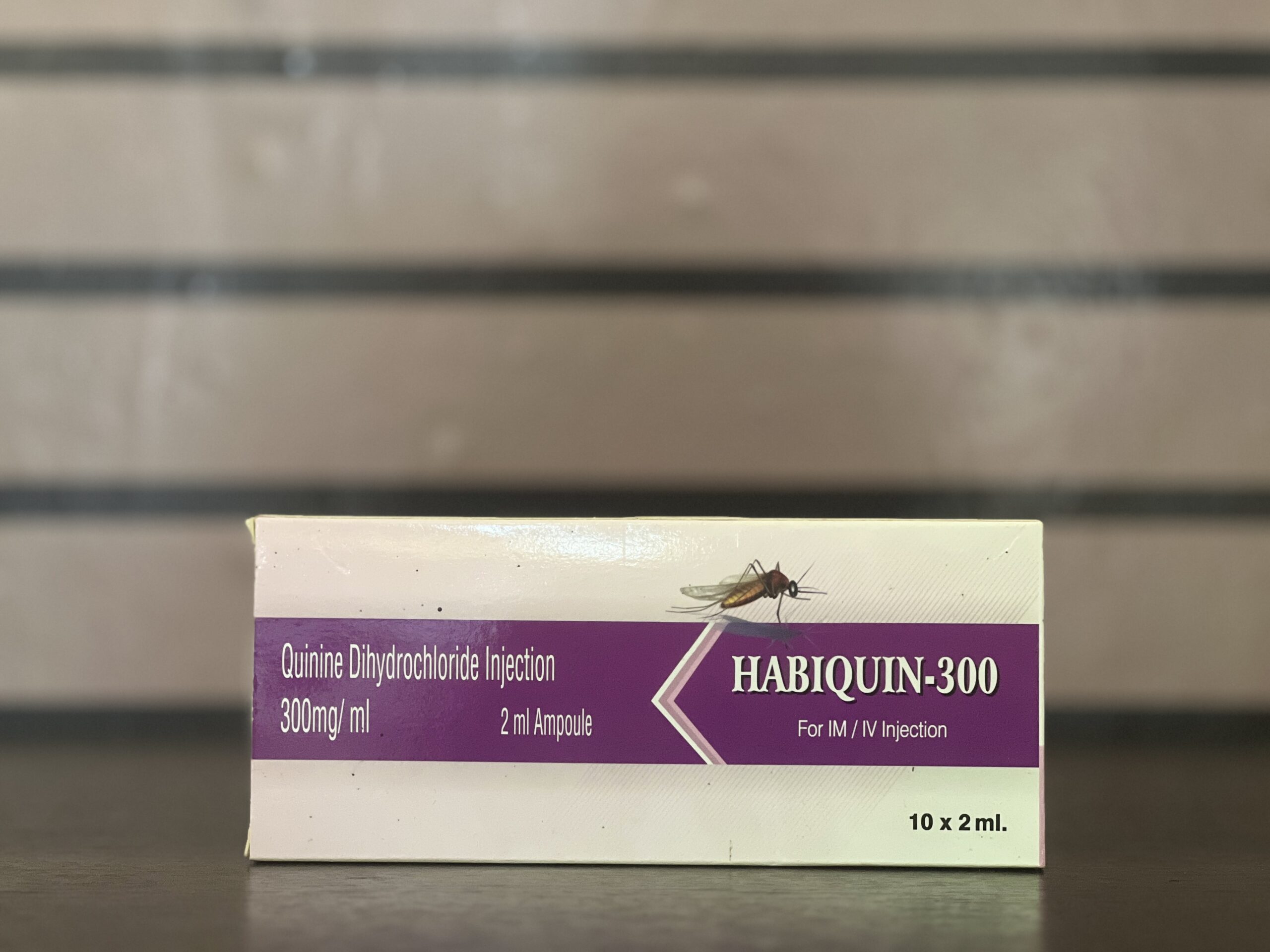
Habiquin Quinine Dihydrochloride Injection is a parenteral antimalarial medication used for the treatment of severe malaria (including cerebral malaria and complicated falciparum malaria) when oral therapy is not possible or when rapid control of parasitemia is required. It acts by interfering with the parasite’s ability to digest hemoglobin and is particularly effective against chloroquine-resistant Plasmodium falciparum strains. It is a life-saving injectable in hospital settings for critically ill patients.
Prescription:
- Prescription required; administered only by healthcare professionals in a hospital or clinic (not for home use or self-administration).
Therapeutic Category:
- Antimalarial (parenteral cinchona alkaloid; for severe/complicated malaria).
Active Ingredients/Composition:
- Quinine dihydrochloride 300 mg per mL (usually supplied as 300 mg/2 mL or 600 mg/2 mL ampoules; concentration is typically 150 mg/mL or 300 mg/mL depending on formulation). Other ingredients: Water for injection, hydrochloric acid/sodium hydroxide for pH adjustment (pH ~3.0–4.0).
Variant:
- Standard injectable solution; common strengths in Ghana: 300 mg/2 mL (150 mg/mL) or 600 mg/2 mL (300 mg/mL) ampoules (Habiquin is often the 300 mg/2 mL variant).
Consume Type:
- Parenteral (intravenous infusion or intramuscular injection; IV preferred for severe malaria).
Directions/Usage:
Administered only by trained medical personnel.
- IV infusion (preferred for severe malaria): Loading dose 20 mg/kg body weight (max 1,400 mg) diluted in 5% dextrose or 0.9% saline, infused over 4 hours. Maintenance: 10 mg/kg every 8 hours (max 700 mg/dose) until oral therapy possible (usually switch to oral quinine within 48–72 hours).
- IM (if IV not possible): 10–20 mg/kg loading dose, then 10 mg/kg every 8–12 hours.
- Duration: 7 days total (parenteral + oral).
- Always dilute IV doses; never give as IV bolus (risk of cardiac arrest).
- Monitor ECG, blood glucose, and vital signs closely (hypoglycemia and QT prolongation are risks).
Common Side Effects:
- Pain at injection site, tinnitus (ringing in ears), headache, nausea, dizziness, visual disturbances (blurred vision, color changes), hypoglycemia (especially in children/pregnant women), or mild hypotension. Serious: Cinchonism (severe tinnitus, deafness, blindness), cardiac arrhythmias (QT prolongation, torsades de pointes), hemolysis (blackwater fever), or severe hypoglycemia.
Package Type:
- Clear glass ampoule (2 mL containing 300 mg or 600 mg quinine dihydrochloride); usually packed in boxes of 5 or 10 ampoules.
Storage Advice:
- Store below 30°C in a cool, dry place, protected from light. Do not freeze. Keep in original carton. Keep out of reach of children.
Safety Advice:
- Contraindicated in known hypersensitivity to quinine, myasthenia gravis, optic neuritis, tinnitus, or concurrent use of drugs prolonging QT interval (e.g., amiodarone, halofantrine) without ECG monitoring. Use extreme caution in pregnancy (safe in all trimesters for severe malaria but monitor fetus), G6PD deficiency (risk of hemolysis), or cardiac disease. Monitor blood glucose (quinine causes hypoglycemia), ECG (QT prolongation), and hemoglobin. Avoid rapid IV bolus—infuse slowly over 4 hours. Switch to oral quinine as soon as patient can tolerate. Report ringing in ears, vision changes, irregular heartbeat, or confusion immediately. Not for prophylaxis—use only for treatment of severe malaria.
Product Substitutes:
- Quinine Dihydrochloride Injection 300 mg/2 mL generics (various importers in Ghana)
- Qualaquin or generic quinine injections
- Other parenteral antimalarials for severe malaria: Artesunate injection (preferred first-line in many guidelines), Artemether injection. Consult a doctor/pharmacist for current WHO-recommended alternatives (artesunate is now first-line for severe malaria in many protocols).
Manufacturer/Marketer:
Country of Origin:





Reviews
There are no reviews yet.