0.00 0

Cart

No products in the cart.

Continue shopping

Ibandronic Acid Liconsa 150mg

New arrival

Ibandronic Acid Liconsa 150mg

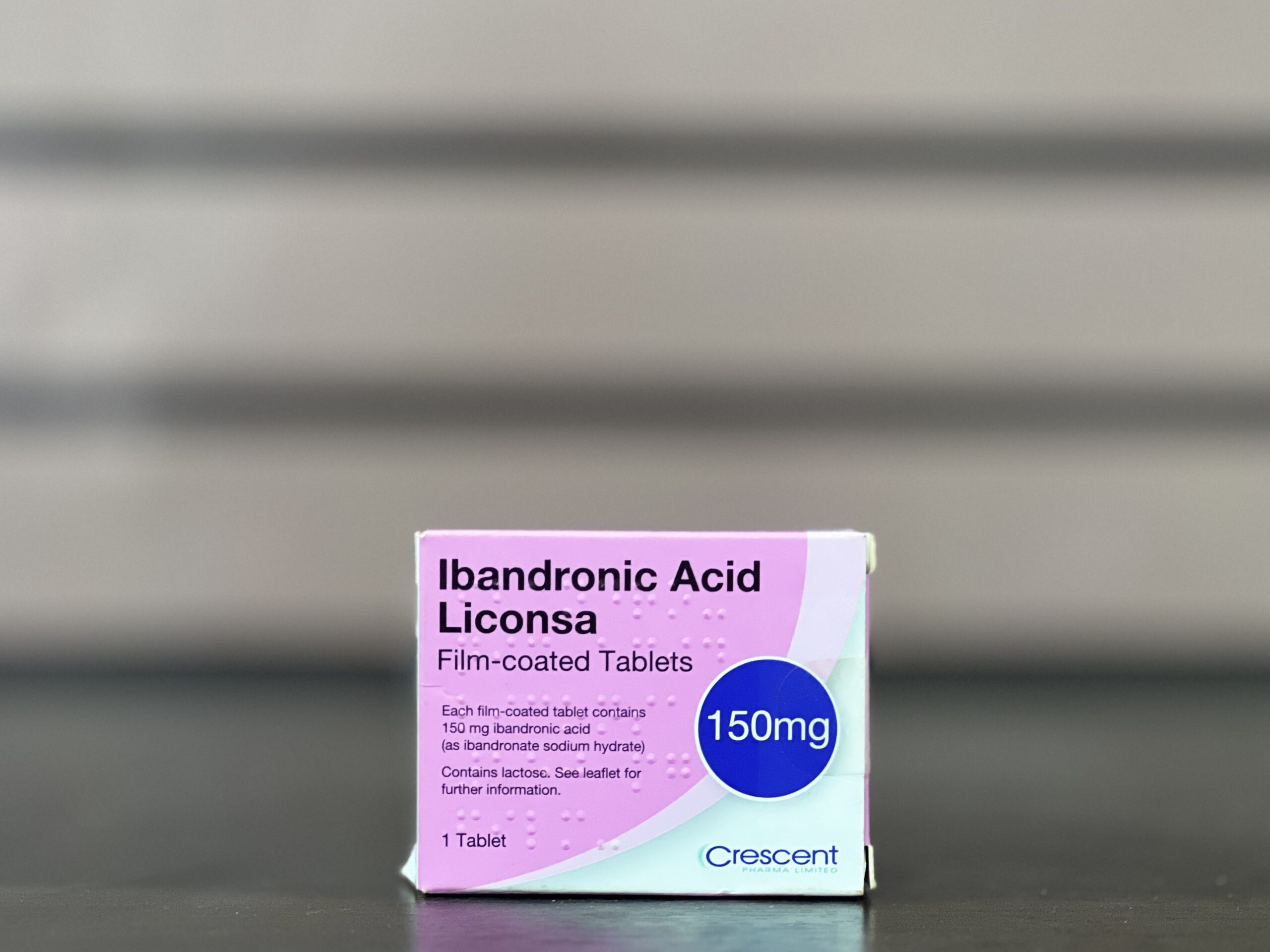
Ibandronic Acid Liconsa 150mg (often branded as Ibandronic Acid 150mg by Crescent or similar generic labelling) is an oral bisphosphonate used primarily for the treatment and prevention of postmenopausal osteoporosis in women. It increases bone mineral density, reduces the risk of vertebral fractures, and helps prevent bone loss. It is taken as a once-monthly tablet to improve patient adherence compared to weekly regimens. It works by inhibiting osteoclast activity, reducing bone resorption. In Ghana (Accra), it is a prescription medication commonly available in pharmacies for osteoporosis management in postmenopausal women or those at high risk of fractures.

Price: 100.00 /Pack

Key Product Information

Bisphosphonate / Bone Resorption Inhibitor (Antiresorptive agent for osteoporosis).

Oral – Film-coated tablet (swallow whole with a full glass of plain water; do not crush, chew, or suck).

Active ingredient: Ibandronic acid (as ibandronate sodium monohydrate) – 150 mg. Other ingredients (excipients, typical): Lactose monohydrate, povidone, microcrystalline cellulose, crospovidone, stearic acid, colloidal anhydrous silica, hypromellose, titanium dioxide, macrogol, and talc (film coating). Tablets are white/off-white, oblong, film-coated, and usually debossed with strength.

Blister packs

Crescent Therapeutics / Crescent Pharmaceuticals

India
Order Through WhatsApp
or
SBP-Tag-Payment-Channels-GH

Product description

Description:

Ibandronic Acid Liconsa 150mg (often branded as Ibandronic Acid 150mg by Crescent or similar generic labelling) is an oral bisphosphonate used primarily for the treatment and prevention of postmenopausal osteoporosis in women. It increases bone mineral density, reduces the risk of vertebral fractures, and helps prevent bone loss. It is taken as a once-monthly tablet to improve patient adherence compared to weekly regimens. It works by inhibiting osteoclast activity, reducing bone resorption. In Ghana (Accra), it is a prescription medication commonly available in pharmacies for osteoporosis management in postmenopausal women or those at high risk of fractures.

Prescription: Prescription-only (requires a doctor’s prescription in Ghana; dispensed by pharmacies with Rx; typically prescribed by physicians, endocrinologists, rheumatologists, or gynaecologists after assessing bone density (DEXA scan) and fracture risk; not OTC due to need for proper diagnosis, monitoring of renal function, and risk of side effects).

Therapeutic Category:

Bisphosphonate / Bone Resorption Inhibitor (Antiresorptive agent for osteoporosis).

Active Ingredients/Composition: Each film-coated tablet contains:

  • Active ingredient: Ibandronic acid (as ibandronate sodium monohydrate) – 150 mg. Other ingredients (excipients, typical): Lactose monohydrate, povidone, microcrystalline cellulose, crospovidone, stearic acid, colloidal anhydrous silica, hypromellose, titanium dioxide, macrogol, and talc (film coating). Tablets are white/off-white, oblong, film-coated, and usually debossed with strength.

Vitamins: None.

Minerals: None (contains no added calcium or vitamin D; often used alongside calcium + vitamin D supplements).

Variant:

  • Ibandronic Acid 150mg film-coated tablets (standard once-monthly strength; common pack of 1 or 3 tablets). Related variants: Ibandronic acid 2.5mg daily oral tablets (older regimen), ibandronic acid 3mg/3ml solution for IV injection (for severe cases or poor oral tolerance). The 150mg tablet is the most common oral monthly variant.

Consume Type:

Oral – Film-coated tablet (swallow whole with a full glass of plain water; do not crush, chew, or suck).

Directions/Usage: Take exactly as prescribed (once monthly).

  • Adults (postmenopausal osteoporosis): 150 mg (1 tablet) once a month, on the same date each month.
  • Take first thing in the morning, on an empty stomach, at least 60 minutes before food, drink, or other medications.
  • Swallow whole with a full glass (180–240 ml) of plain water (not mineral water, juice, tea, or coffee).
  • Remain upright (sitting or standing) for at least 60 minutes after taking – do not lie down.
  • Do not eat, drink, or take other medications for at least 60 minutes after dose.
  • Duration: Long-term (often years) for osteoporosis; regular bone density monitoring and dental check-ups recommended.

Common Side Effects: Common:

  • Gastrointestinal: Dyspepsia, nausea, abdominal pain, diarrhea, constipation, esophagitis.
  • Musculoskeletal: Bone/joint/muscle pain (often transient).
  • Headache.
  • Flu-like symptoms (fever, chills, fatigue) – more common after first dose. Rare/serious (seek help): Oesophageal ulcers or perforation (if not taken properly), osteonecrosis of the jaw (rare with oral use), atypical femoral fractures (long-term use), severe allergic reactions, hypocalcaemia, or eye inflammation (uveitis).

Package Type:

Blister packs (commonly 1 tablet per blister; packs of 1 or 3 tablets; foil blisters in carton with patient information leaflet and dosing calendar).

Storage Advice: Store at room temperature (below 25–30°C) in original packaging, protected from moisture and light. Keep tightly closed. Out of reach of children.

Safety Advice:

  • Take strictly as directed (on empty stomach, upright for 60 minutes, with plain water only) to avoid oesophageal irritation/ulcers.
  • Contraindicated in hypocalcaemia, oesophageal disorders (e.g., stricture, achalasia), inability to stand/sit upright for 60 minutes, or hypersensitivity.
  • Caution in renal impairment (avoid if CrCl <30 mL/min), pregnancy/breastfeeding (not recommended), or dental procedures (risk of osteonecrosis of the jaw – dental check before starting).
  • Ensure adequate calcium and vitamin D intake (usually supplemented separately).
  • Monitor serum calcium, renal function, and dental health.
  • If difficulty/pain swallowing, chest pain, heartburn, jaw pain, or thigh/groin pain occurs, stop use and seek urgent care.
  • Keep out of reach of children (overdose risk).

Product Substitutes: Similar oral ibandronic acid 150mg tablets in Ghana include:

  • Generic ibandronic acid 150mg film-coated tablets (various importers).
  • Bonviva or Bondronat (original Roche brand if stocked).
  • Other brands like Ibandronate Sandoz or local generics. Alternatives: Alendronate (Fosamax) 70mg weekly, risedronate (Actonel) 35mg weekly, zoledronic acid IV (Aclasta) yearly, or denosumab (Prolia) injection. Consult physician/endocrinologist in Accra for alternatives.

Manufacturer/Marketer:

Crescent Therapeutics / Crescent Pharmaceuticals (India-based; produces generic ibandronic acid under various export brands). Marketed/distributed in Ghana by local importers/pharmacies (widely stocked as imported generic).

Country of Origin:

India (manufactured by Crescent or licensed Indian partner; imported to Ghana and widely available in local pharmacies).

Additional information

Additional information

Product reviews

Reviews

There are no reviews yet.

Be the first to review “Ibandronic Acid Liconsa 150mg”

Your email address will not be published. Required fields are marked *

Customers Also Bought