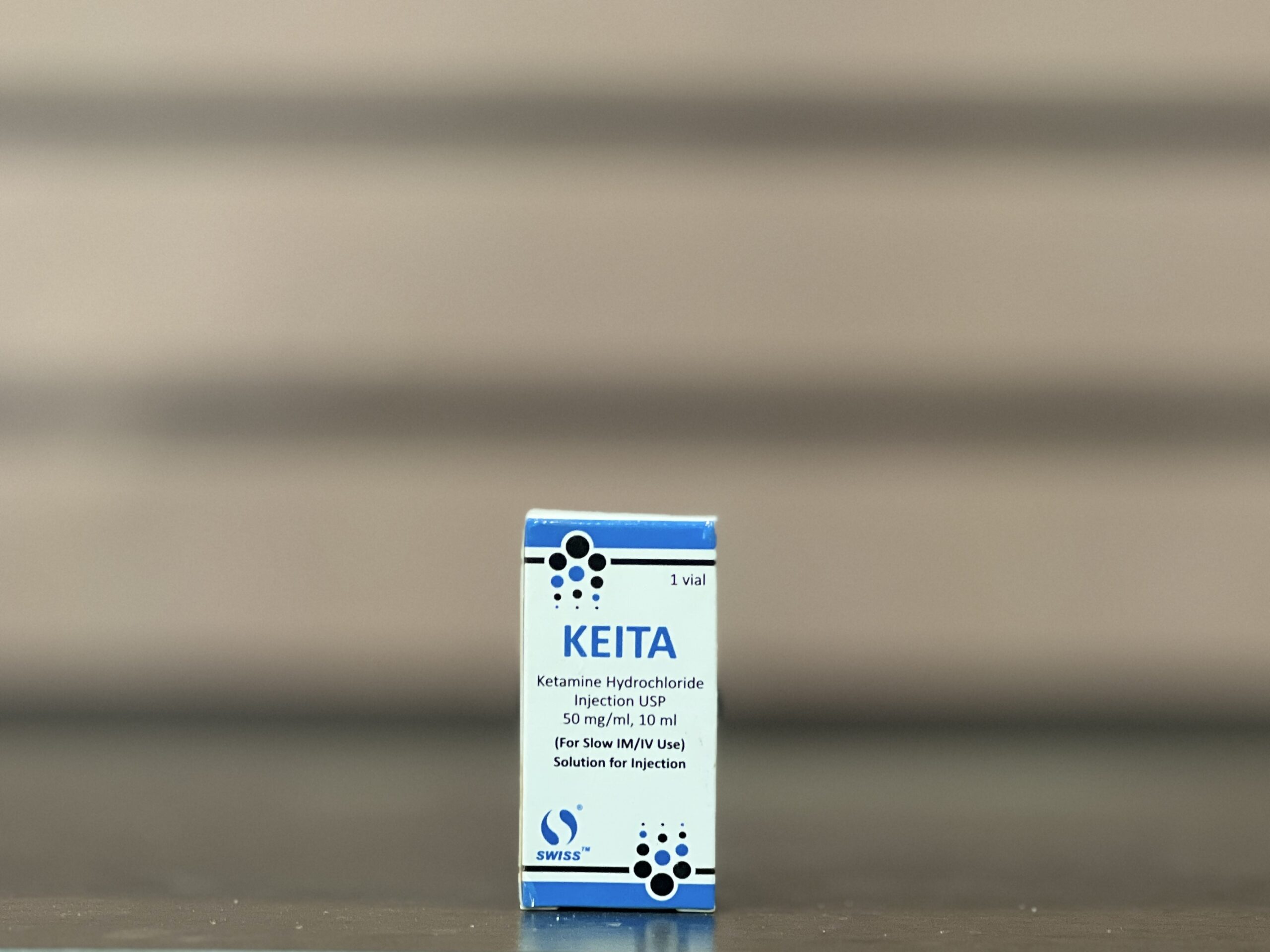
Ketamine Hydrochloride Injection USP 50mg/ml (10ml vial by Swiss Pharma) is a sterile, non-narcotic dissociative anaesthetic and analgesic used for induction and maintenance of general anaesthesia, procedural sedation, emergency analgesia, and certain pain management scenarios. It produces a dissociative state (cataleptic immobility, amnesia, analgesia) while maintaining airway reflexes and cardiovascular stability better than many other anaesthetics. It is indicated for short surgical procedures, emergency department sedation, paediatric procedures, burn dressing changes, and as an adjunct in status asthmaticus or severe pain. In Ghana (Accra), it is a controlled prescription injectable used exclusively in hospital operating theatres, emergency departments, and ICUs for anaesthesia and sedation.
Price: ₵130.00

Description:
Ketamine Hydrochloride Injection USP 50mg/ml (10ml vial by Swiss Pharma) is a sterile, non-narcotic dissociative anaesthetic and analgesic used for induction and maintenance of general anaesthesia, procedural sedation, emergency analgesia, and certain pain management scenarios. It produces a dissociative state (cataleptic immobility, amnesia, analgesia) while maintaining airway reflexes and cardiovascular stability better than many other anaesthetics. It is indicated for short surgical procedures, emergency department sedation, paediatric procedures, burn dressing changes, and as an adjunct in status asthmaticus or severe pain. In Ghana (Accra), it is a controlled prescription injectable used exclusively in hospital operating theatres, emergency departments, and ICUs for anaesthesia and sedation.
Prescription: Prescription-only / Controlled Substance (Schedule H1 in many systems). Requires a doctor’s prescription in Ghana; administered only by trained healthcare professionals (anaesthesiologist’s, emergency physicians, intensivists) in hospitals/clinics with airway monitoring equipment. Not OTC or for outpatient dispensing due to high abuse potential, risk of respiratory depression, hallucinations, and emergence reactions.
Therapeutic Category:
General Anaesthetic / Dissociative Anaesthetic / Analgesic.
Active Ingredients/Composition:
Vitamins: None.
Minerals: None.
Variant:
Consume Type:
Injectable – Intravenous (IV) bolus or infusion, or Intramuscular (IM) injection (administered only by healthcare professionals in controlled settings).
Directions/Usage: Administered only in hospital/clinic with full monitoring (oxygen saturation, BP, airway, capnography).
Common Side Effects: Common:
Package Type:
Glass multi-dose vial of 10 ml (containing 500 mg ketamine hydrochloride; single vial or pack of 5–10 vials; labelled carton with controlled substance warnings, dilution instructions, and safety alerts).
Storage Advice: Store at room temperature (below 25–30°C) in original packaging, protected from light. Do not freeze. Once opened, use within 28 days (check label) or discard unused portion. Keep locked in secure storage (controlled substance).
Safety Advice:
Product Substitutes: Similar ketamine 50mg/ml injections in Ghana include:
Manufacturer/Marketer:
Varies by exact batch (Ketamine 50mg/ml injections often by Indian manufacturers like Neon Laboratories, Samarth Life Sciences, or local Ghanaian partners for generics). Marketed/distributed in Ghana by local importers/pharmacies (widely stocked in hospital pharmacies).
Country of Origin:
India (primary source for generic ketamine 50mg/ml injections imported to Ghana; BP/USP-compliant generics common in African markets).
Do you have any questions? Do not hesitate to contact us.

![sta cox 200mg capsules [celecoxib bp 200mg]](https://www.scabpharmacy.com/wp-content/uploads/2026/01/sta-cox-200mg-600x450.jpg)
![xigpa 10mg [empagliflozin] tablet](https://www.scabpharmacy.com/wp-content/uploads/2025/09/xigpa-10mg-600x450.jpg)

![acupan [nefopam] injection](https://www.scabpharmacy.com/wp-content/uploads/2025/04/acupan-inj-600x450.jpg)

Reviews
There are no reviews yet.